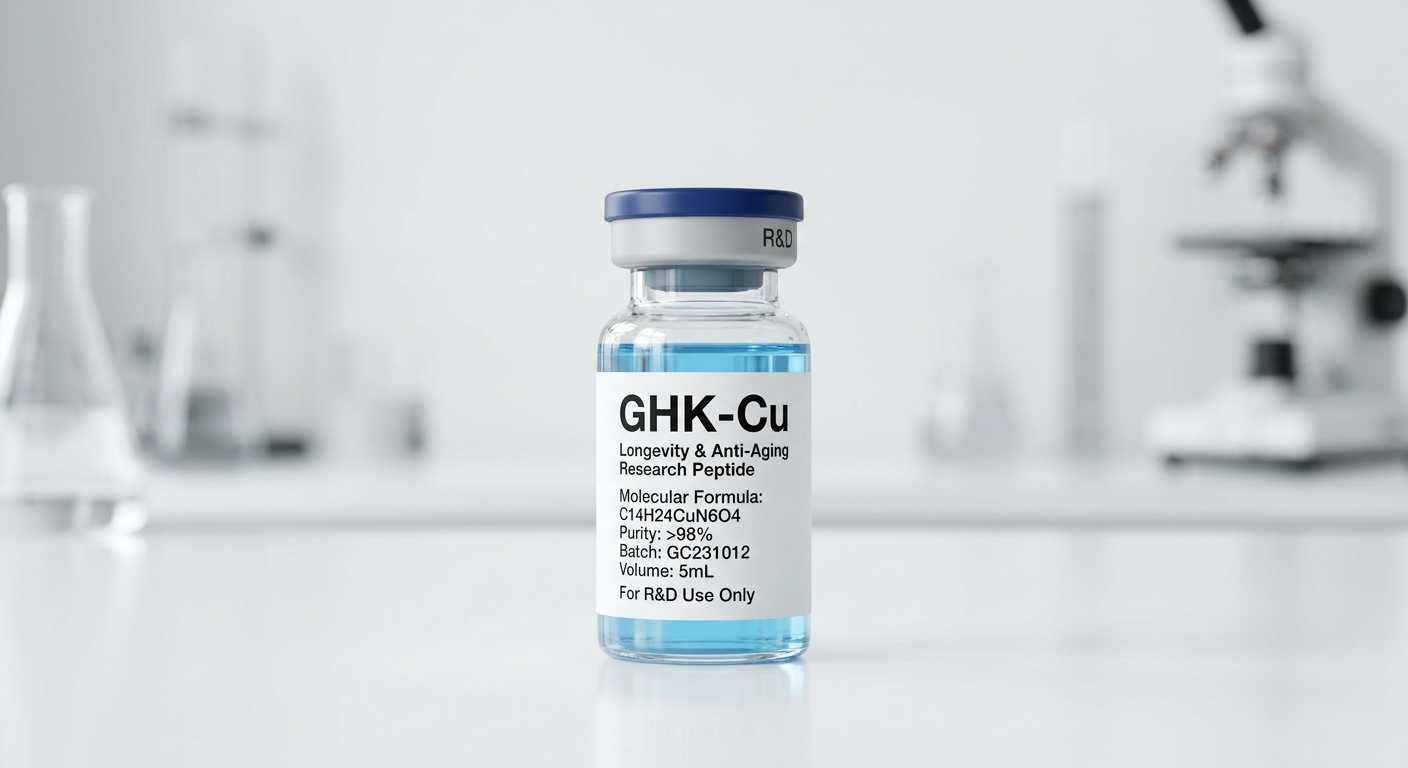
GHK-Cu
Naturally occurring copper-binding tripeptide (Gly-His-Lys-Cu2+) present in human plasma. Plasma levels decline 60% between ages 20-60. Studied for collagen
Buy more, save more
Total Price
$30
For research & laboratory use only. Not for human consumption.
Administration Route
Subcutaneous injection
Collagen Synthesis +70%
Upregulates COL1A1 and COL3A1 in fibroblast studies
Wound Healing
Attracts macrophages and fibroblasts to wound sites
Neuroprotection
Promotes BDNF expression and protects against neurodegeneration
Effect Profile
Cellular Longevity
Collagen Synthesis
Oxidative Protection
Energy Restoration
Effect Timeline
Skin texture improvements begin; wound healing accelerated
Collagen density visibly improved; fine lines reducing
Significant skin thickness improvement; pigmentation evening
Deep wrinkle reduction; skin elasticity restored
Start — Week 2
Skin texture improvements begin; wound healing accelerated
Week 4
Collagen density visibly improved; fine lines reducing
Week 8
Significant skin thickness improvement; pigmentation evening
Week 12
Deep wrinkle reduction; skin elasticity restored
Mechanism of Action
Scientific Research
Annals of the New York Academy of Sciences (2015)
Journal of Aging Research and Clinical Practice (2015)
Product FAQs
Stacks Well With
Related Products
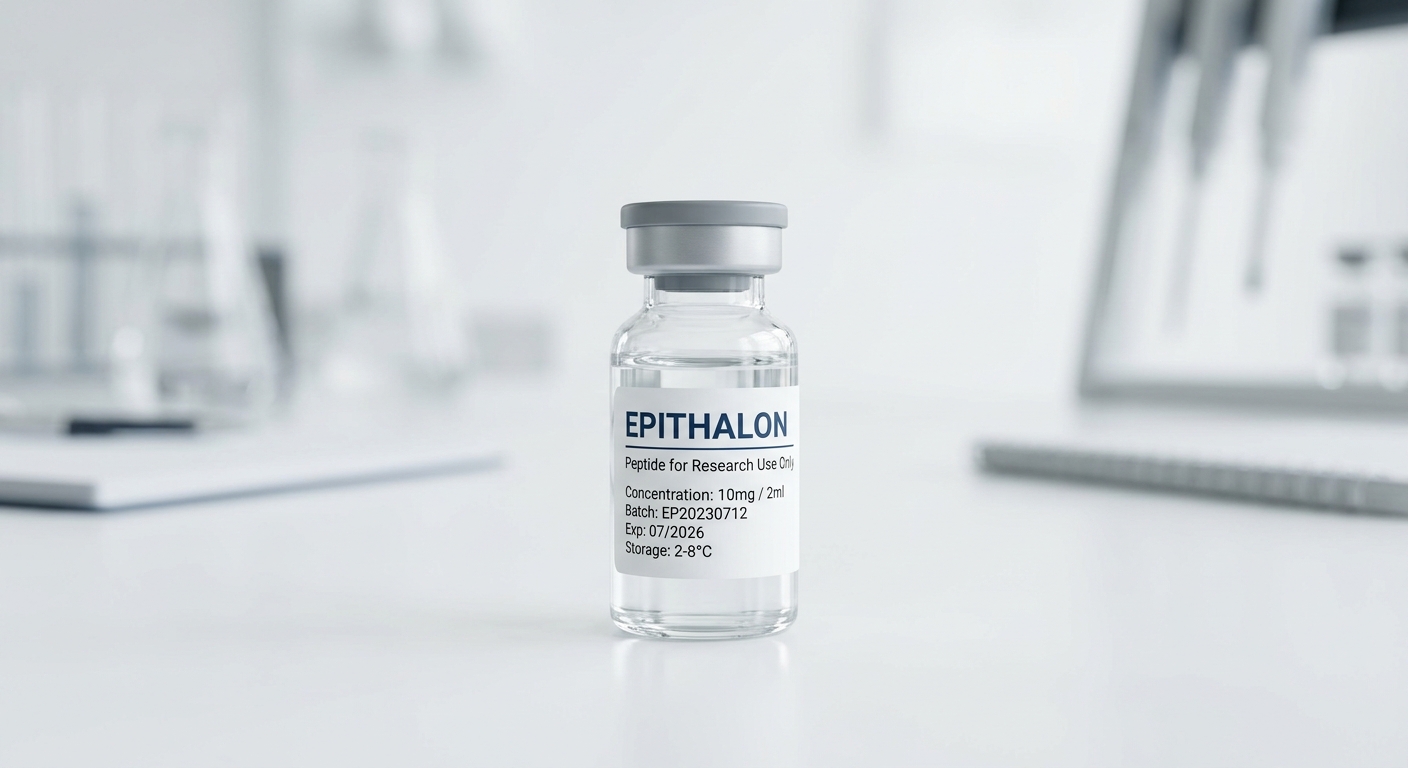
Epithalon
Synthetic tetrapeptide (Ala-Glu-Asp-Gly) derived from the pineal gland. Studied for telomerase activation, telomere elongation, and lifespan extension in
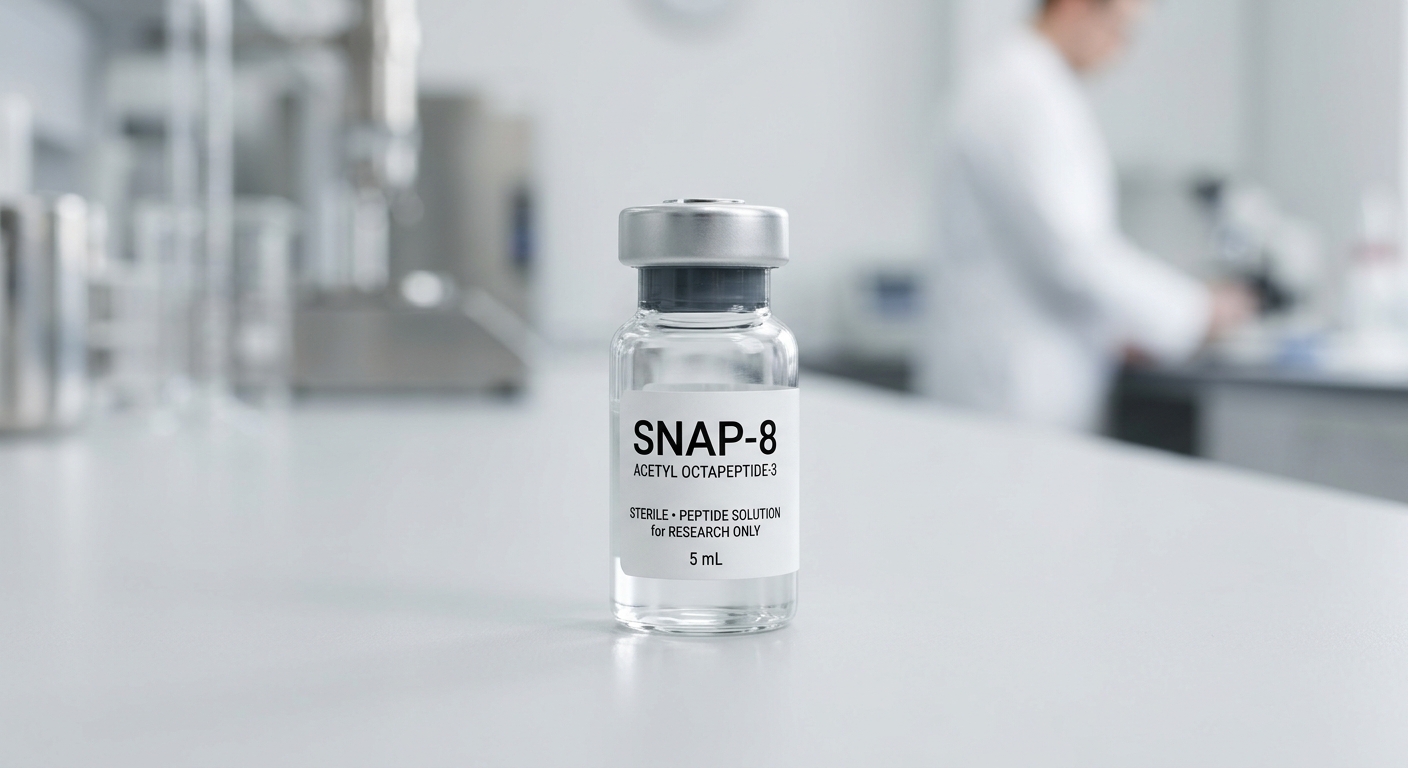
SNAP-8
Octapeptide that competes with SNAP-25 in the SNARE complex to reduce acetylcholine vesicle release at neuromuscular junctions, reducing expression line depth
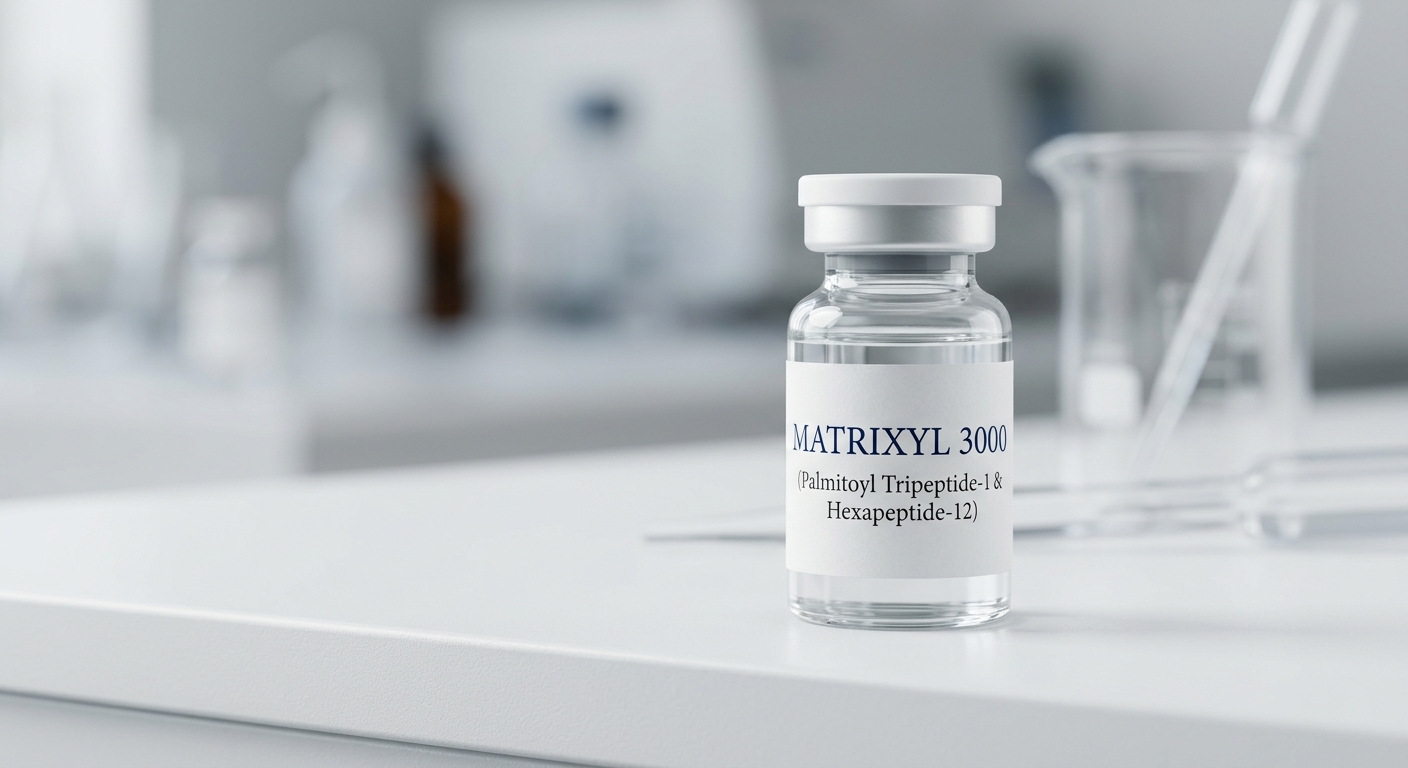
Matrixyl 3000 (Palmitoyl Tripeptide-1 & Hexapeptide-12)
The most extensively clinically tested anti-aging peptide complex. Matrikine fragments activate fibroblasts to produce collagen I, III, VI, and fibronectin for
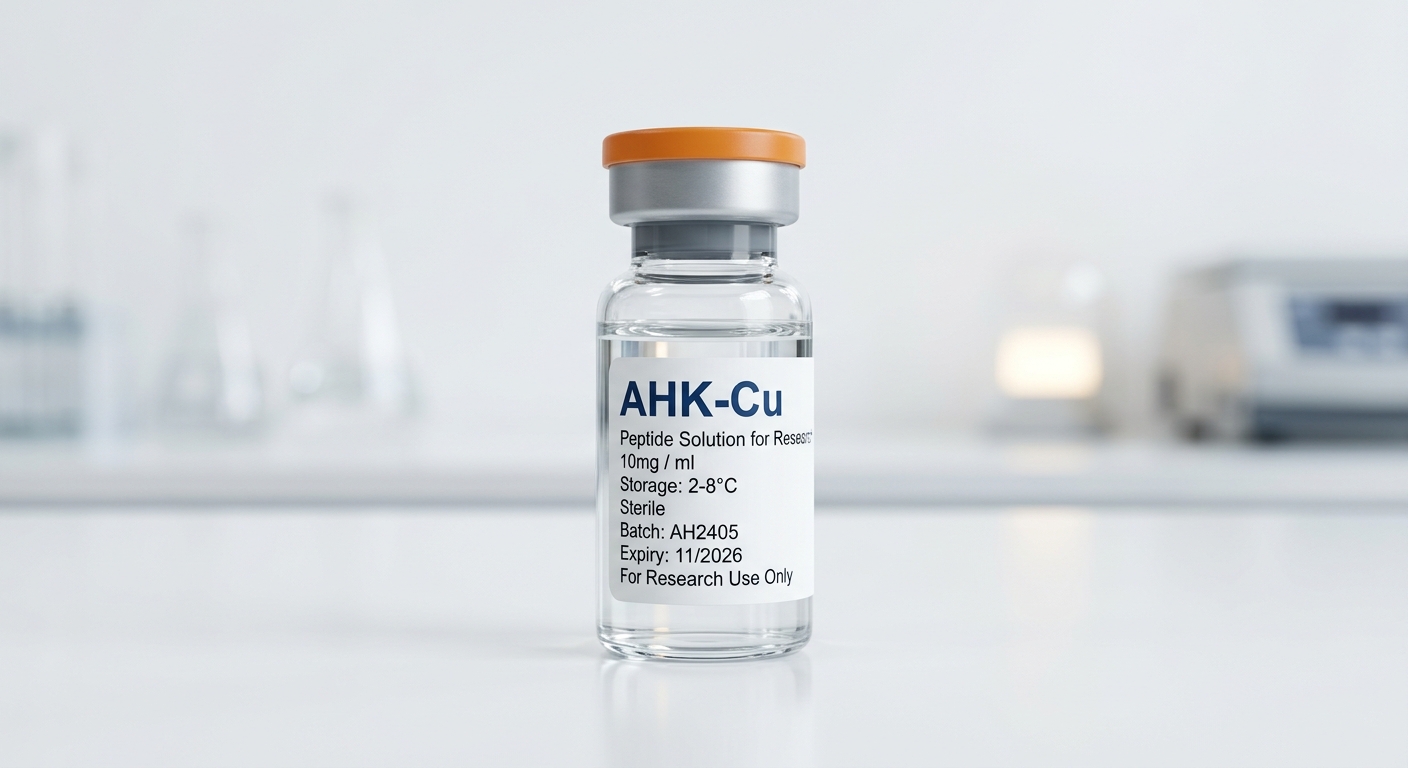
AHK-Cu
Copper-binding tripeptide (Ala-His-Lys-Cu2+) with structural similarity to GHK-Cu. Primarily studied for hair follicle stimulation, scalp vascularity, and