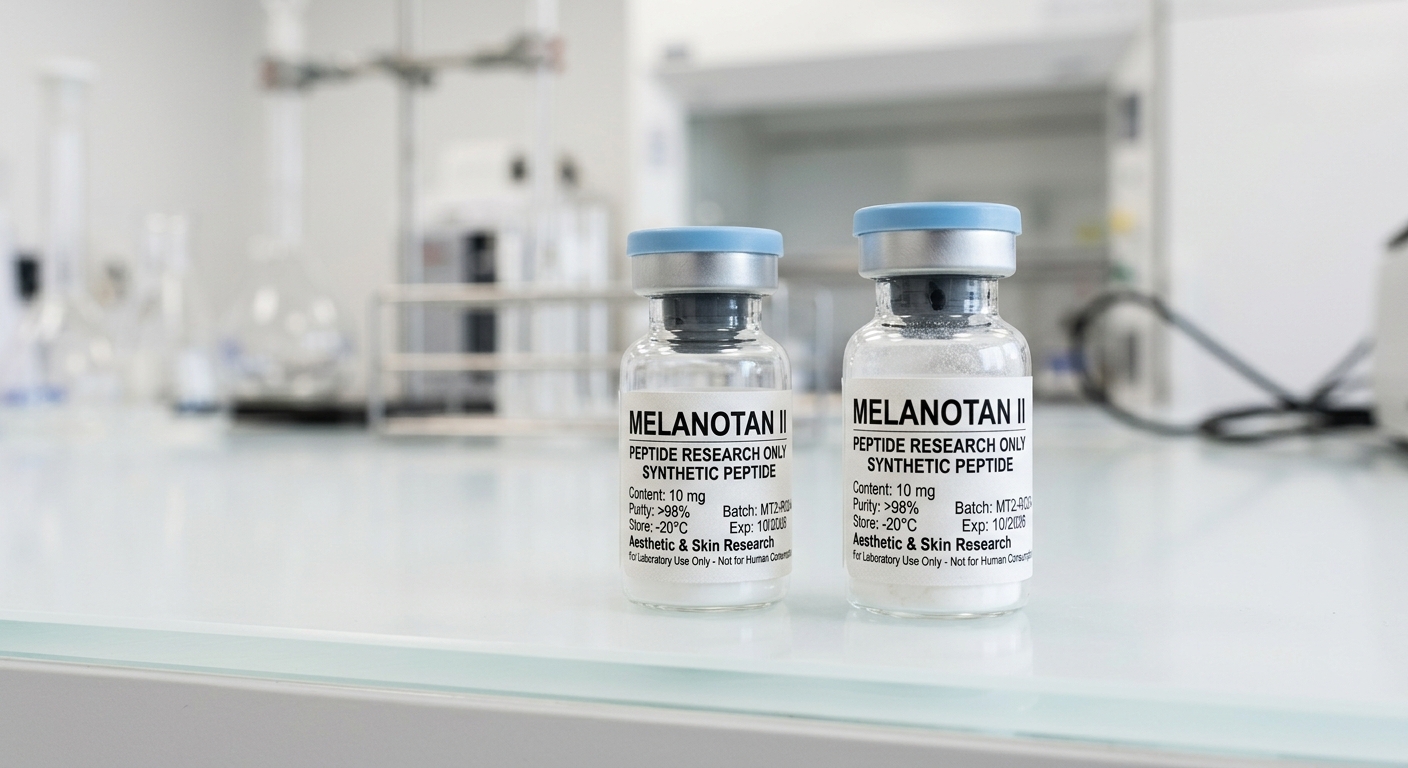
Melanotan II
Cyclic alpha-MSH analogue activating MC1R through MC4R. Produces tanning, sexual effects, and appetite suppression simultaneously. Widely studied for
Buy more, save more
Total Price
$60
For research & laboratory use only. Not for human consumption.
Half-Life
~33 minutes
Administration Route
Subcutaneous injection
Rapid Tanning
Cyclic alpha-MSH analogue produces deep tan in 7-14 days
Libido Enhancement
MC4R activation drives arousal as side effect
Multi-Receptor Action
Binds MC1R (tan) + MC4R (arousal) + MC3R (appetite)
Effect Profile
Skin Tone
Collagen Density
Anti-Wrinkle
Wound Healing
Effect Timeline
Initial pigmentation change; subtle darkening begins
Tan significantly visible; 3–5 UV sessions sufficient
Deep tan achieved; maintenance dose reduces UV exposure needed
Tan maintained with minimal UV; photoprotective pigment stable
Start — Days 3–7
Initial pigmentation change; subtle darkening begins
Week 2
Tan significantly visible; 3–5 UV sessions sufficient
Week 4
Deep tan achieved; maintenance dose reduces UV exposure needed
Week 8
Tan maintained with minimal UV; photoprotective pigment stable
Mechanism of Action
Scientific Research
Peptides (2000)
Urology (2000)
Product FAQs
Stacks Well With
Melanotan I (Afamelanotide)
Selective MC1R agonist (Scenesse) approved in EU/US for erythropoietic protoporphyria. Produces sustained melanin-based photoprotection without the behavioural
PT-141 (Bremelanotide)
FDA-approved melanocortin receptor agonist (Vyleesi) for hypoactive sexual desire disorder. Acts centrally on MC3R/MC4R to restore sexual motivation without
Related Products
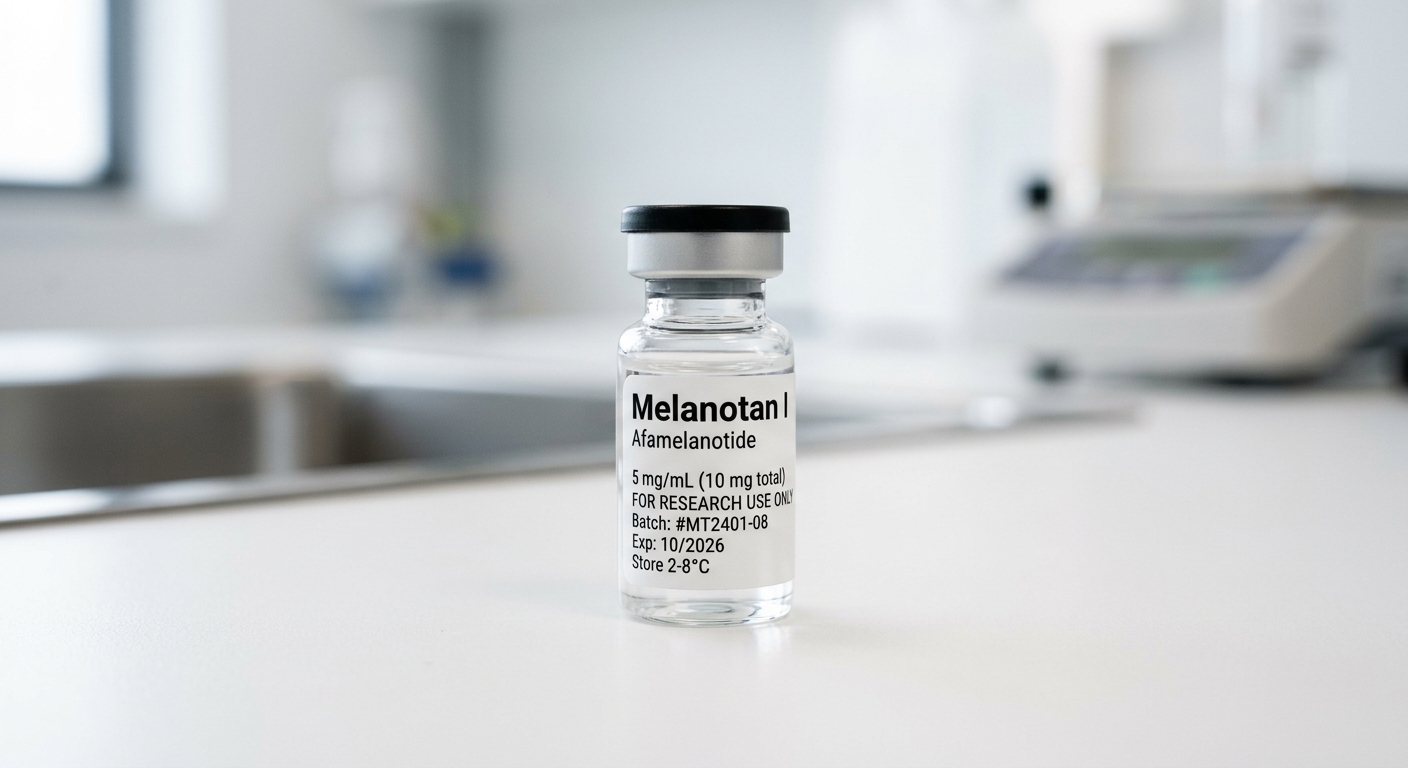
Melanotan I (Afamelanotide)
Selective MC1R agonist (Scenesse) approved in EU/US for erythropoietic protoporphyria. Produces sustained melanin-based photoprotection without the behavioural
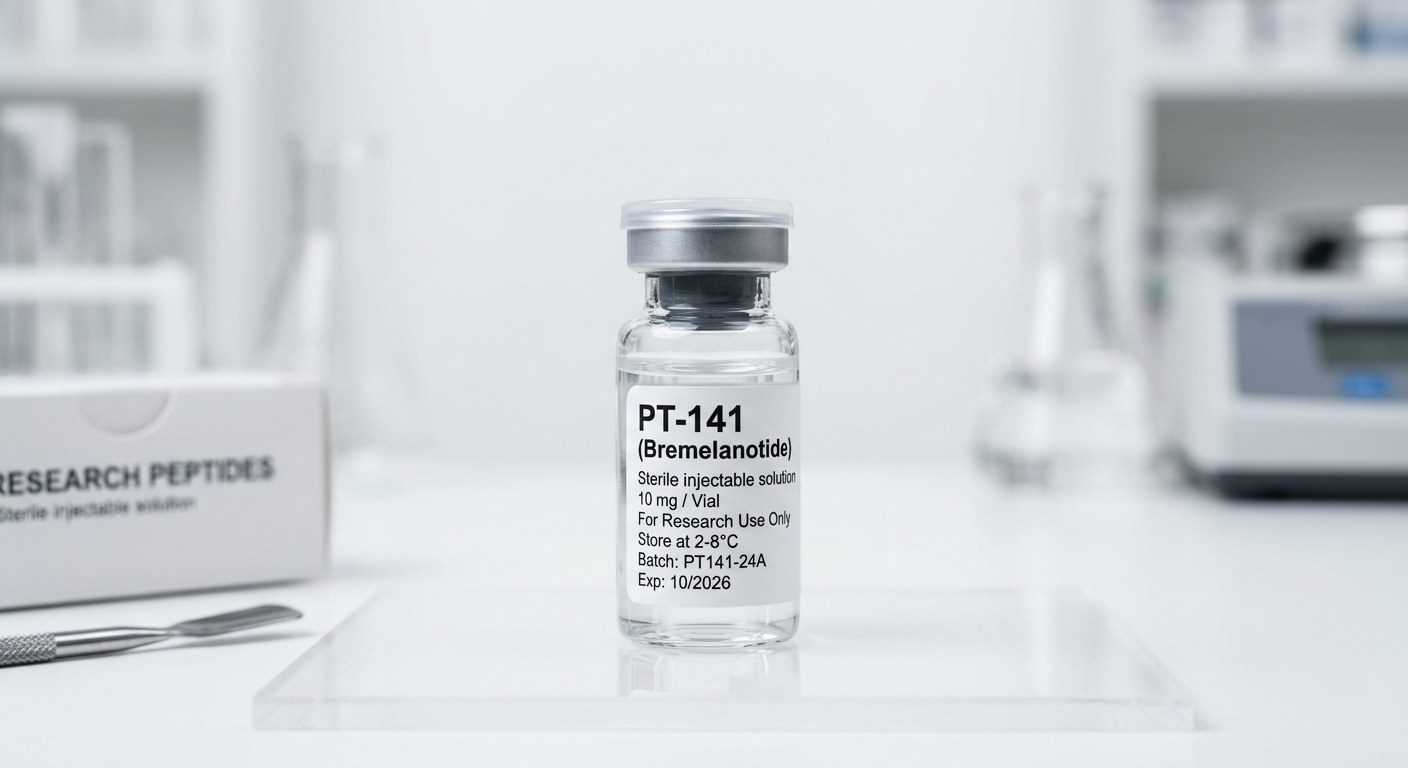
PT-141 (Bremelanotide)
FDA-approved melanocortin receptor agonist (Vyleesi) for hypoactive sexual desire disorder. Acts centrally on MC3R/MC4R to restore sexual motivation without
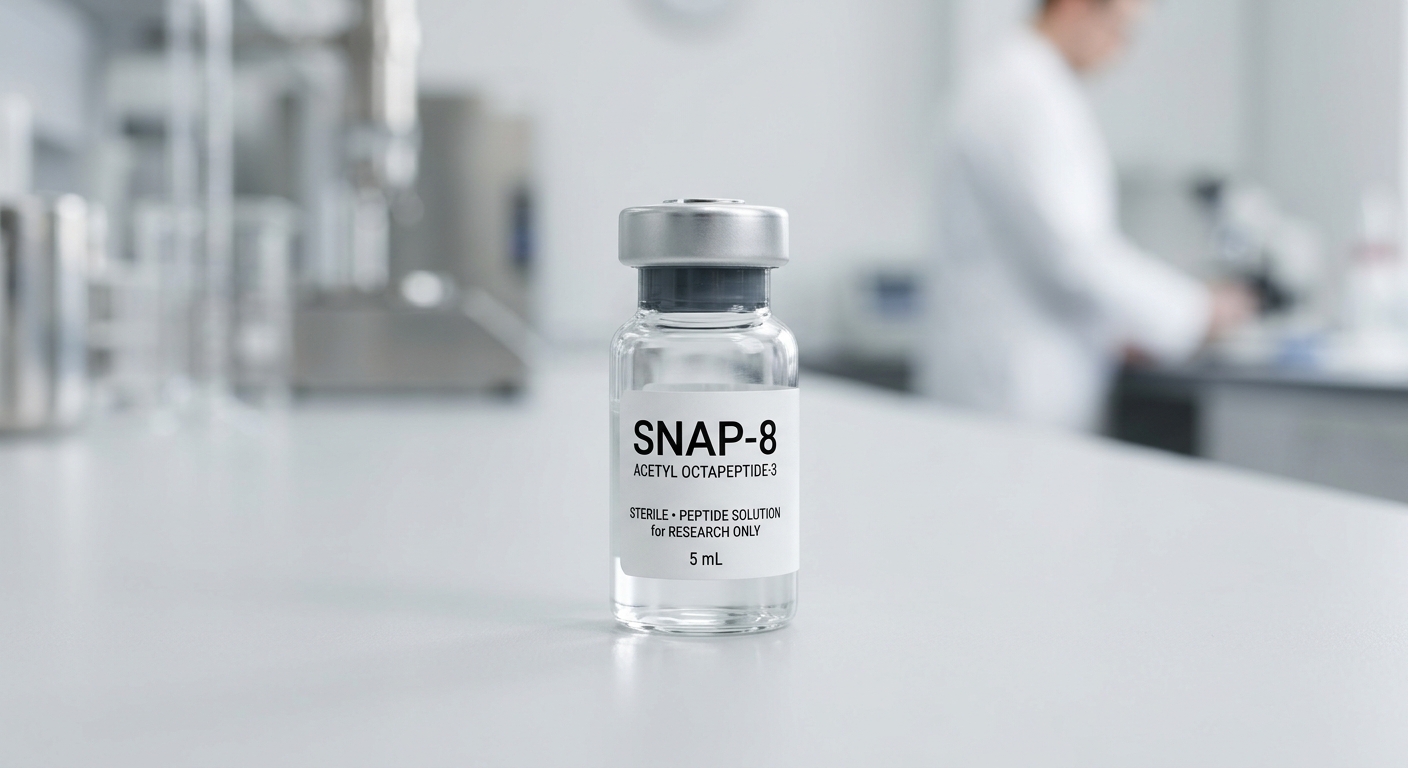
SNAP-8
Octapeptide that competes with SNAP-25 in the SNARE complex to reduce acetylcholine vesicle release at neuromuscular junctions, reducing expression line depth